
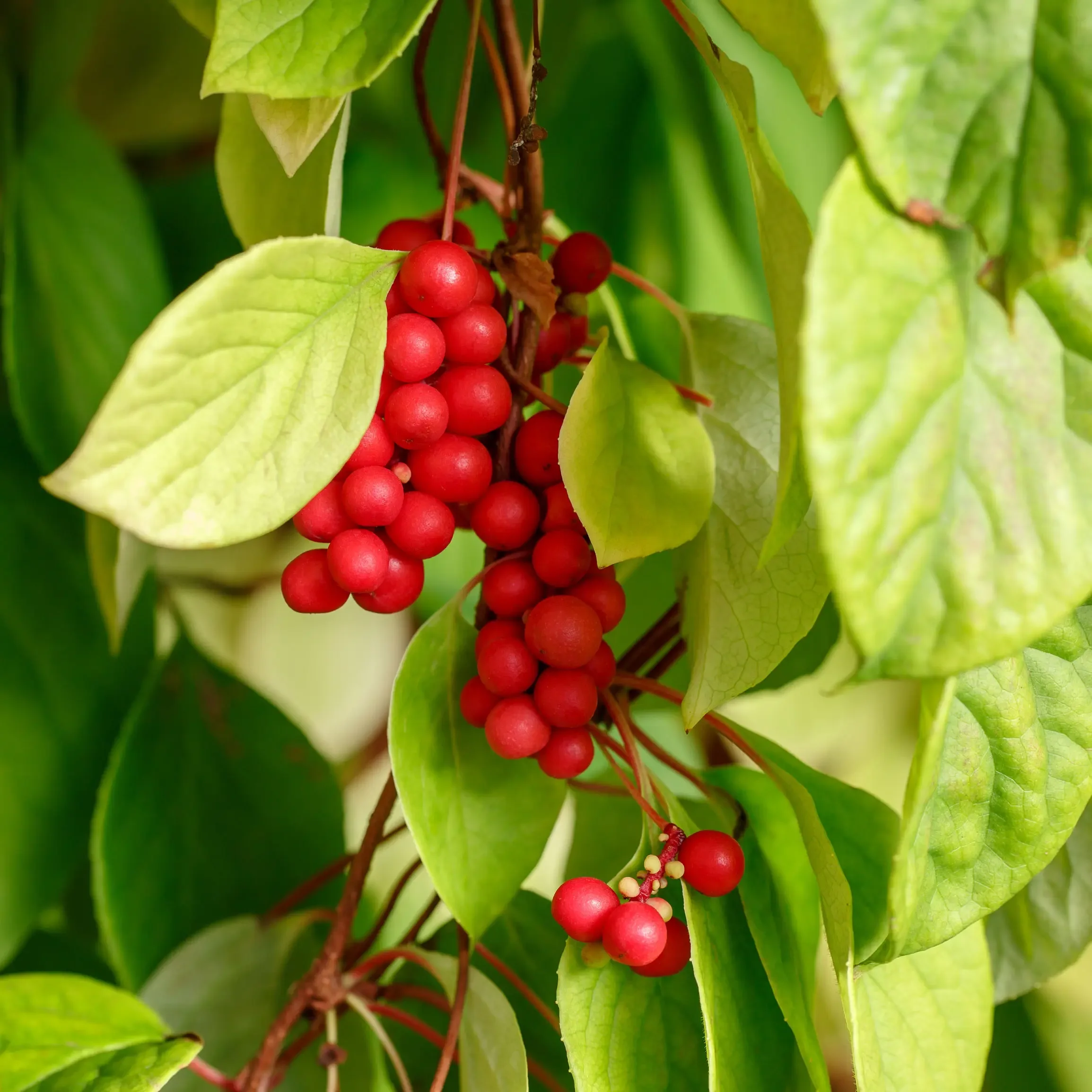
SCHISANDRA
The Five-Flavour Berry
Bold, complex, and unapologetically intense.
Grown in Southwestern Ontario
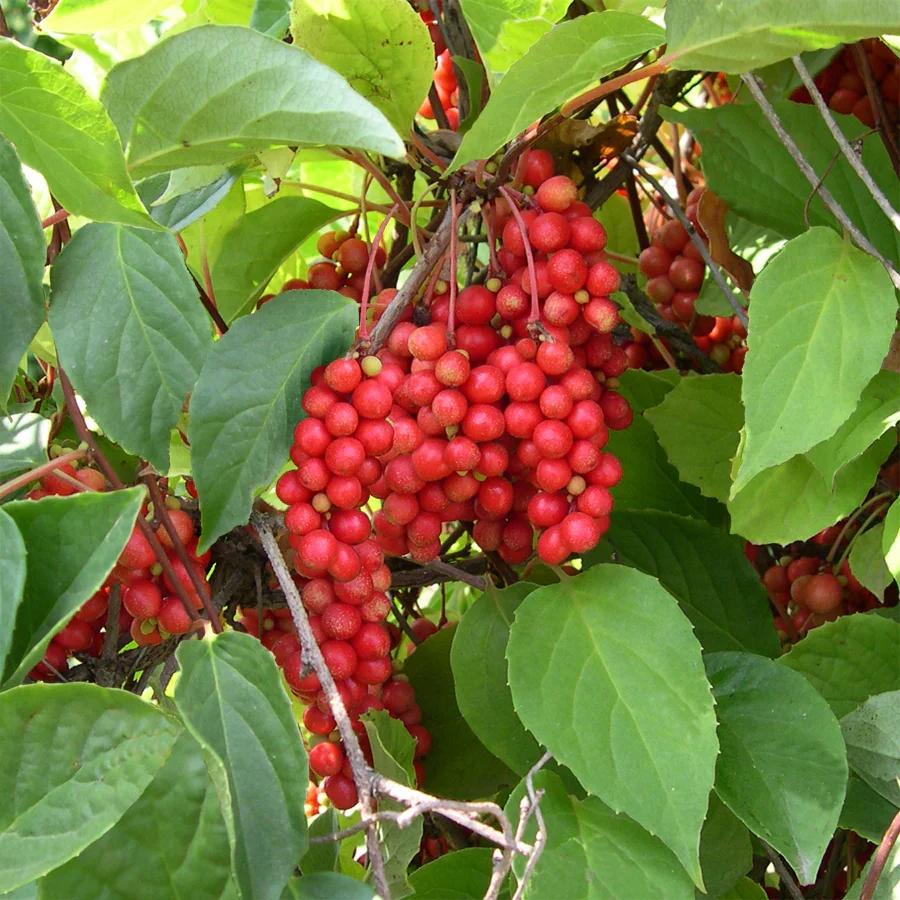
Rooted in Traditional Chinese Medicine
Schisandra (Schisandra chinensis) has a long and well-documented history in Traditional Chinese Medicine, where it was traded, prescribed, and relied upon for centuries as part of a broader system concerned with balance, resilience, and long-term vitality.
Within this tradition, schisandra was not viewed as a single-purpose ingredient. It was used for its ability to be taken consistently and harmoniously over time, particularly in contexts related to endurance, composure, and preserving internal stability during periods of physical or mental strain. Its value came from restraint, not force—used steadily rather than aggressively or in excess.
The berry’s name—often translated as the five-flavour fruit—reflects more than taste. In traditional Chinese thinking, the presence of all five flavours was considered meaningful. It signified completeness rather than specialization, and balance rather than emphasis on any single system or function. Foods expressing all five flavours were understood to act broadly, supporting the whole rather than targeting one area at the expense of others.
Schisandra was respected not because it pushed the body in a single direction, but because it was understood to help the body hold its ground over time.
What Schisandra Was Traditionally Used For
In Traditional Chinese Medicine, schisandra was historically used in relation to systems associated with respiration, fluid balance, and vitality. It was often described as having a “binding” or “astringent” quality, meaning it was valued for helping prevent excessive loss and supporting steadiness under stress.
It was traditionally traded and incorporated for uses connected to:
Sustaining endurance during physical exertion
Supporting composure and focus over long periods
Maintaining balance during fatigue or depletion
Preserving vitality rather than stimulating it
These uses were not isolated or prescriptive. Schisandra was rarely used alone. It was combined with other ingredients as part of a broader system that emphasized moderation, balance, and long-term resilience.
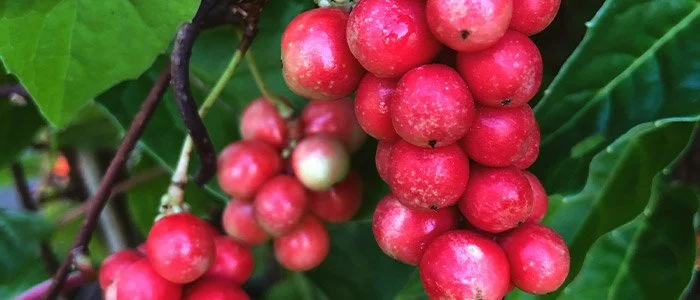
The Five-Flavour Berry
Schisandra is known as the five-flavour fruit because it expresses all five tastes:
Sweet
Sour
Bitter
Salty
Pungent
In Traditional Chinese Medicine, this was not viewed as coincidence or novelty. Each flavour was understood to relate to different aspects of the body and different modes of action. A food that contained all five flavours was considered complete—interacting broadly rather than narrowly.
This is why schisandra was understood as stabilizing rather than stimulating.
It did not push one system at the expense of another.
Its flavour alone signaled its role.
This rare sensory complexity is one of the reasons schisandra has always been used with restraint. Its intensity does not invite excess. It signals intention.
Few fruits offer this level of balance.
Fewer still have maintained relevance for centuries because of it.
Where Tradition Meets Modern Research
Schisandra is now being studied for reasons that closely mirror its traditional reputation.
Researchers are particularly interested in schisandra’s naturally occurring lignans, a class of plant compounds that are relatively rare in common fruits. These lignans, alongside polyphenols and antioxidant compounds, are being examined for how they interact with cells and how they behave within the body as part of a complex whole.
Early laboratory studies, animal research, and small human trials have explored schisandra in areas related to oxidative stress, physical performance, and metabolic processes. While this research is still developing, the consistency of scientific interest has placed schisandra in a category of its own among functional fruits.
What makes schisandra especially notable is that much of this research focuses on the whole fruit, not isolated extracts. The emphasis is on how multiple compounds function together rather than on a single active ingredient.
This approach closely mirrors how schisandra has always been understood.
This is why schisandra was traditionally understood as stabilizing rather than stimulating.
It did not push one system at the expense of another.
Its flavour alone signaled its role.
The alignment between traditional use and modern research is difficult to ignore. Both point to the same conclusion: schisandra’s relevance lies not in a single effect, but in its complexity.
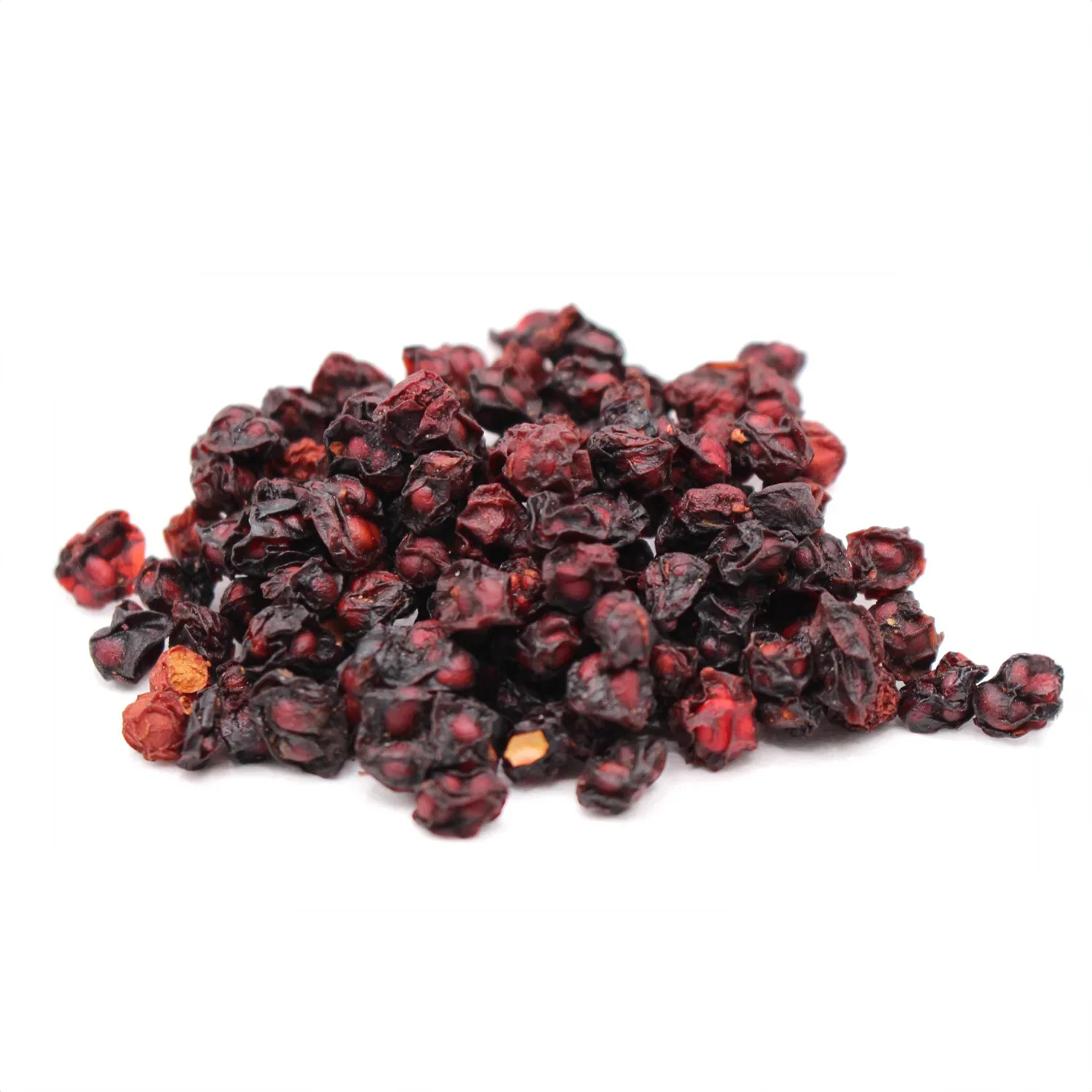
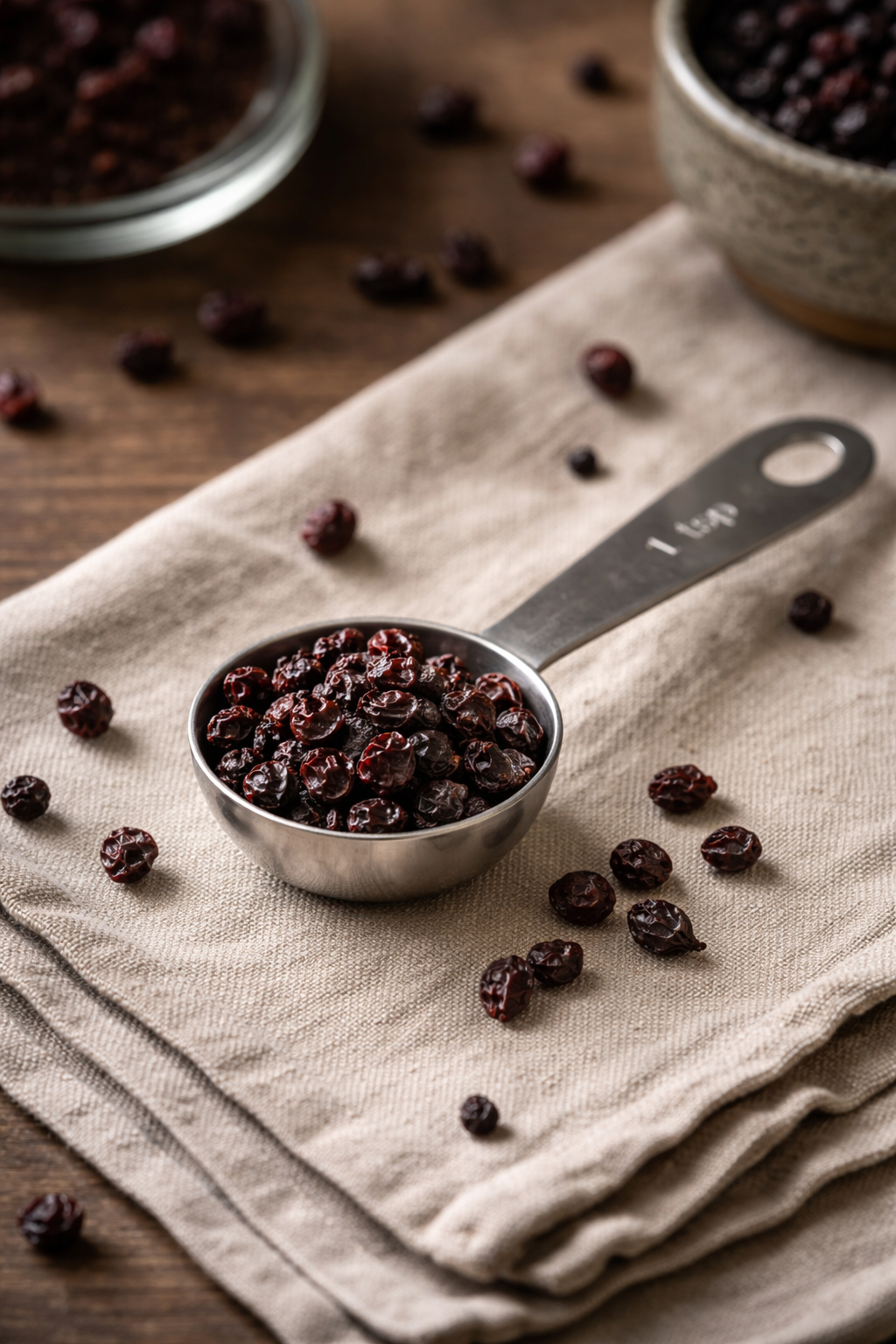
How Schisandra Has Traditionally Been Used
Schisandra has never been used for quick or immediate effects.
Traditionally, it was incorporated regularly and in small amounts. Its value was understood to come from consistent use over time, not from large quantities or short-term intensity. This approach stands in contrast to modern supplement culture, where more is often assumed to be better.
Schisandra is not consumed like a typical berry. Its flavour is intense and its natural complexity is the reason it has always been used deliberately rather than casually.
In Traditional Chinese Medicine, schisandra was not treated as universally appropriate. Its use depended on the individual and the context, reinforcing the idea that this is a berry used with intention rather than excess.
This long-view, food-based approach is one of the reasons schisandra continues to attract attention today, particularly as interest grows in whole foods rather than isolated compounds.
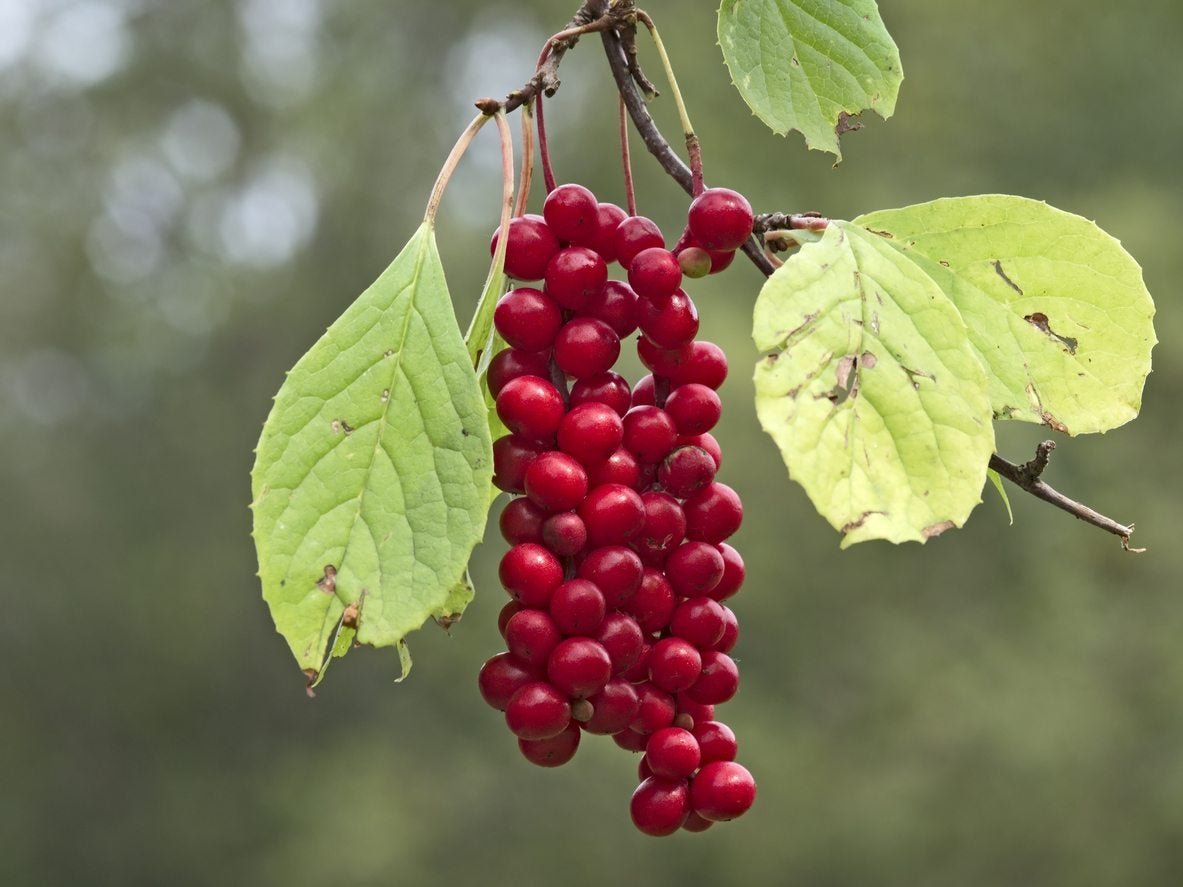
Grown With Intention
Schisandra is not widely grown in Canada, and establishing it successfully requires patience and long-term commitment.
At Xander Farms, schisandra is grown at meaningful commercial scale, allowing us to focus on consistency, plant health, and careful harvest timing. How the berry is grown directly influences its quality and character.
Our approach prioritizes soil health, vine management, and harvest at the right stage of ripeness. This ensures schisandra that is true to its nature—intense, complex, and reliable from season to season.
Grown in Southwestern Ontario.