Aronia (Black Chokeberry)
Deep Colour. Serious Character.
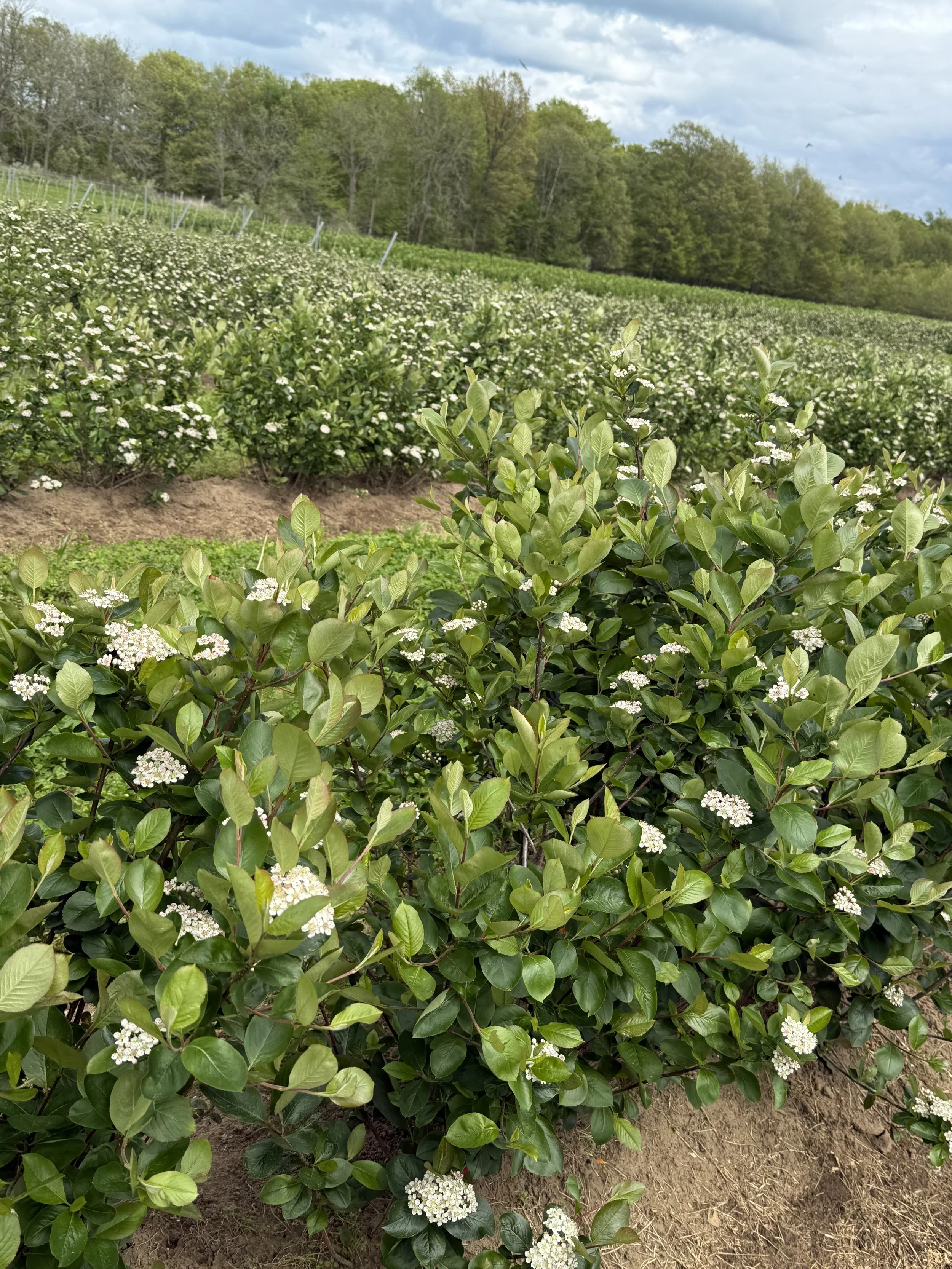
Grown in Southwestern Ontario
Behind the Colour Is Real Composition
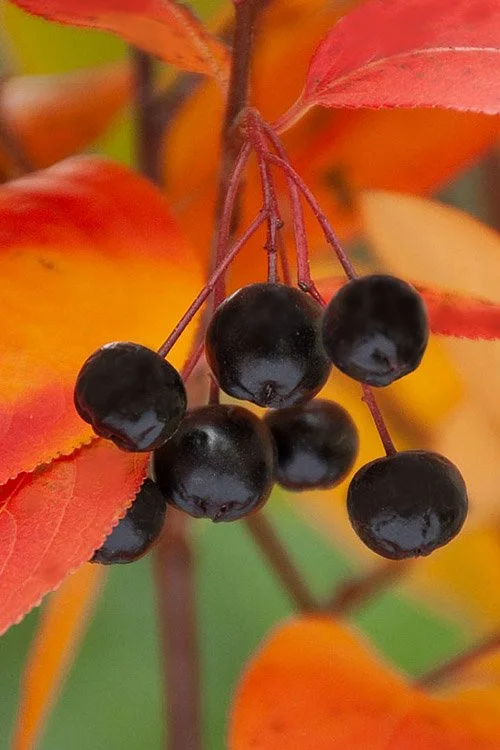
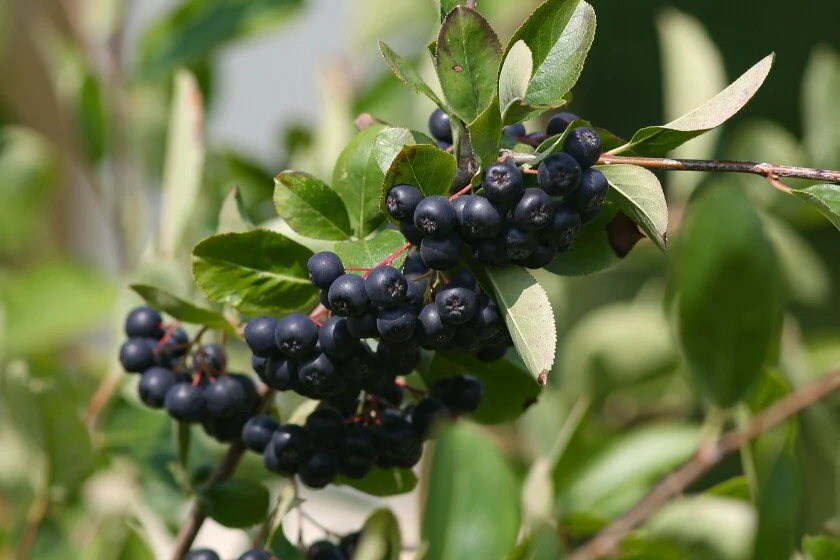
Aronia berries are deeply pigmented fruits with a naturally concentrated composition.
Their dark purple-black colour comes from anthocyanins and other polyphenols — plant compounds commonly found in deeply coloured fruits and widely studied in nutrition science. These compounds occur naturally in the berry and are responsible for much of aronia’s visual intensity.
Aronia berries are also a source of vitamin C, a nutrient that contributes to normal immune function and plays a role in collagen formation for healthy skin and connective tissue. In addition, they contain dietary fibre, a naturally occurring component of whole fruits.
Because of this combination of deep pigmentation, vitamin C, and fibre, aronia berries are often described as nutrient-dense, valued for concentration rather than sweetness.
Enjoyed fresh in small amounts or more commonly used frozen, dried, or blended, aronia offers bold character and natural nutritional complexity — without needing exaggeration.
Why Aronia Is Often Called a Superfruit
The term superfruit is often used casually.
With aronia, it becomes difficult to dismiss.
Aronia berries are among the most deeply pigmented fruits grown commercially in northern climates. Their nearly black colour reflects an unusually high concentration of anthocyanins and other polyphenols — plant compounds found in dark fruits and widely examined in nutrition research.
Aronia is also a source of vitamin C, a nutrient that contributes to normal immune function and plays a role in collagen formation for skin and connective tissue. Alongside this, aronia contains dietary fibre, further contributing to its reputation as a concentrated whole food.
What makes aronia stand out is not a single nutrient, but how much is present in such a small amount of fruit. Colour, compound density, and vitamin content appear together — tightly packed rather than diluted.
When a fruit consistently delivers this level of concentration, superfruit stops reading as a trend and starts reading as a description.
Some fruits are sweet. Others are diluted.
Aronia is concentrated.
Why Researchers Pay Attention
Aronia berries appear repeatedly in research related to deeply pigmented fruits and plant compound concentration.
Their nearly black-purple colour reflects a high concentration of anthocyanins, water-soluble plant pigments found in dark fruits. Across measured berry species, aronia consistently ranks at the high end of anthocyanin concentration, exceeding levels found in many commonly consumed berries, including blueberries.
Among these pigments, cyanidin-3-galactoside is the predominant anthocyanin present in aronia and contributes significantly to the berry’s depth of colour.
Because of this concentration, aronia is frequently included as a reference fruit in research examining anthocyanin-rich berries and how pigment density varies across species.
Some fruits attract attention.
Others keep it.
Chosen for Balance: Nero Aronia
Aronia is expressed through many varieties, each with its own balance of colour, structure, and flavour.
At Xander Farms, we grow Nero aronia, a European-developed variety that is less commonly grown in Canada. It was selected for its deep pigmentation and balanced flavour profile, while maintaining the defining density aronia is known for.
Nero’s character allows the fruit to be used more broadly in food applications, without softening what makes aronia distinct.
Aronia berries have a bold, structured flavour profile. Eaten fresh, they are firm and deeply flavoured, with a pronounced astringency that creates a dry, mouth-puckering sensation. When pressed into juice, that intensity becomes more rounded — deeply coloured, full-bodied, and distinctly tart, carrying richness without relying on sweetness.
Everyday Use
Aronia is valued for how it performs in everyday food use.
Because of its natural intensity, aronia is most often used in juice, or combined with other ingredients rather than eaten fresh in quantity. Pressed juice retains the berry’s deep colour and structure, making it well suited for blending with lighter fruits or diluting with water or sparkling water.
Frozen aronia can be added to smoothies or used in cooking, where heat and dilution soften astringency while preserving colour. Dried berries and powders are commonly used in baking, yogurt, oatmeal, or mixed into granola and cereals.
In each form, aronia contributes depth, colour, and structure, rather than sweetness — making it a functional ingredient as much as a fruit.
Grown With Intention
Aronia is a resilient crop, well suited to northern growing conditions.
At Xander Farms, aronia is grown with attention to plant balance and soil health, allowing the fruit to develop its natural colour, structure, and flavour over the season.
From harvest through processing, the focus remains on preserving what defines the berry — depth, density, and consistency — without unnecessary intervention.