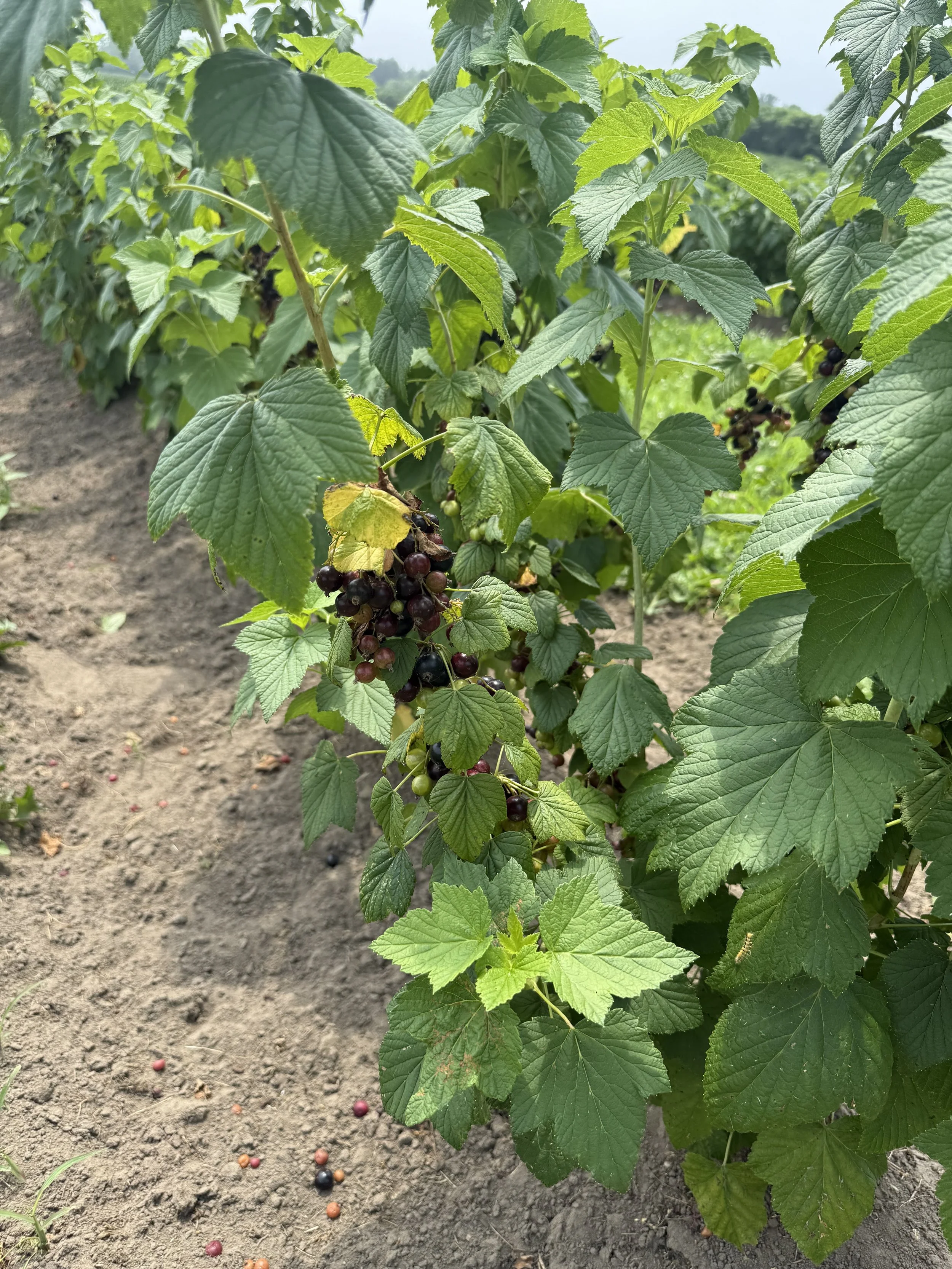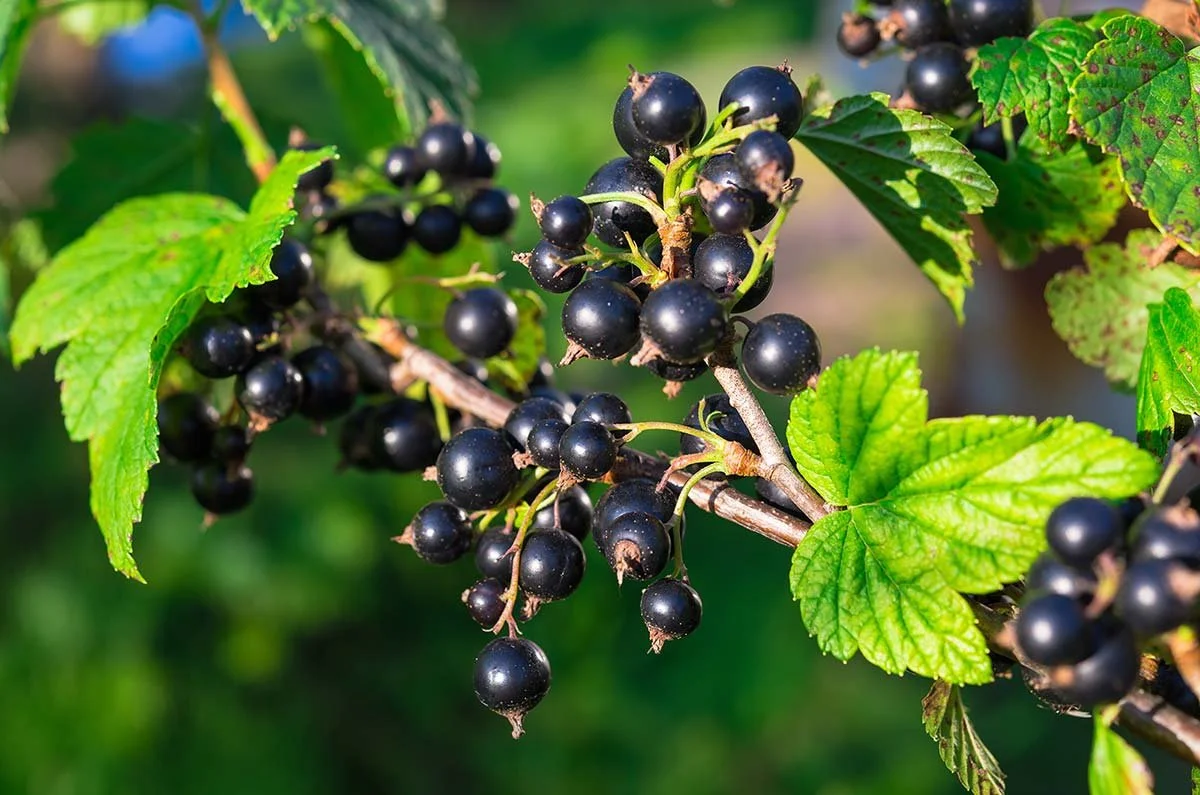
Black Currants
Dark by Nature. Bold by Design.
Grown in Southwestern Ontario
Deep Colour. Distinct Character.
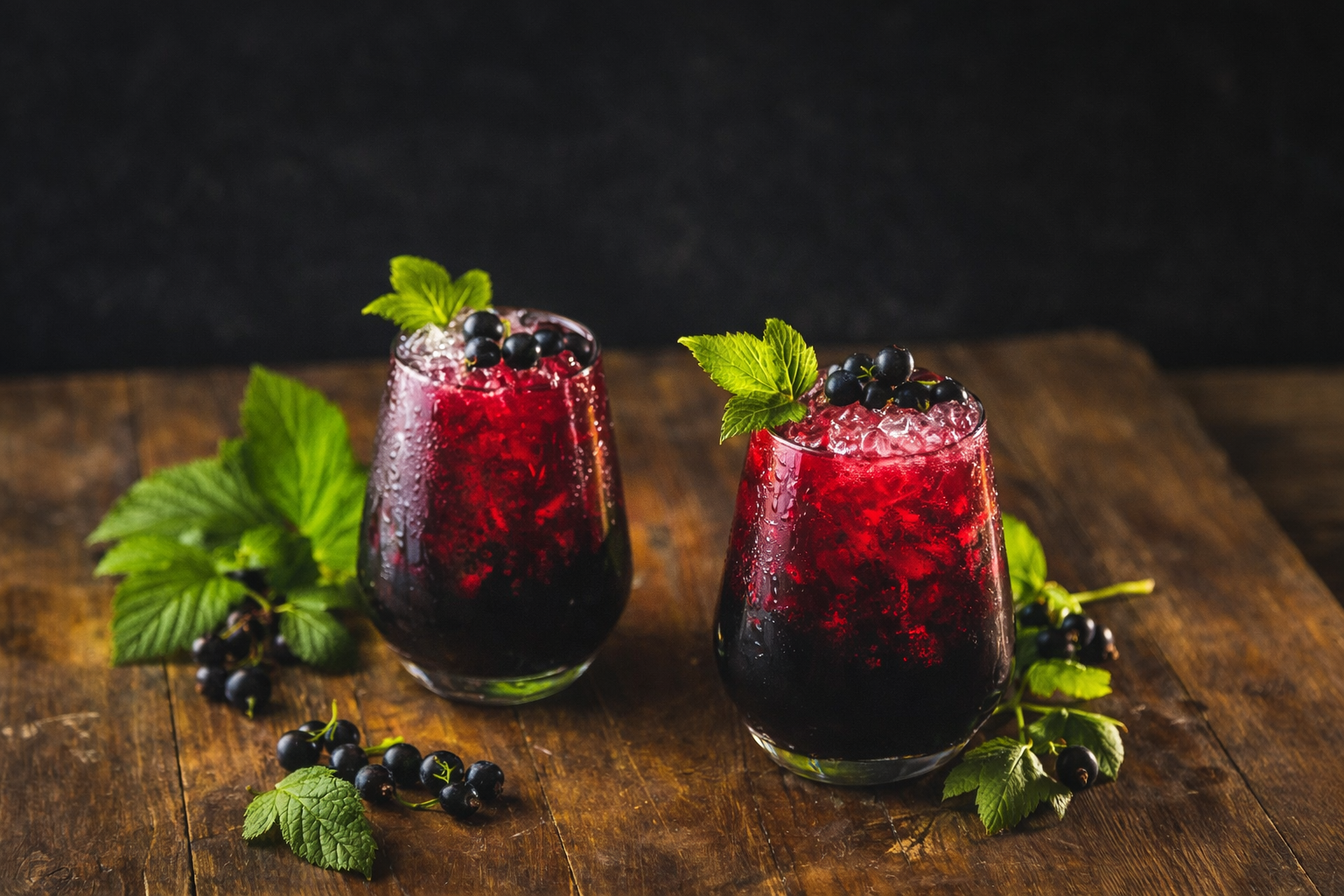
Black currants are known for their deep purple-black colour, distinctive aroma, and bold, tangy flavour. Unlike many berries bred for mild sweetness, black currants retain their natural intensity — in both taste and composition.
Their colour is not limited to the skin. It runs through the flesh and juice, reflecting the presence of naturally occurring plant compounds commonly found in deeply pigmented fruits.
Because of this concentration, black currants maintain flavour and colour in applications where many other berries fade. This reliability is why they have been grown for generations in cooler climates and continue to be valued in both traditional and modern food uses.
Exceptionally High in Vitamin C
By weight, black currants contain significantly more vitamin C than oranges.
Vitamin C is an essential nutrient that:
contributes to normal immune function
supports collagen formation for skin and connective tissue
helps the body absorb iron
This high vitamin C content has long been one of the defining characteristics of black currants and remains a key reason they continue to be referenced in nutritional research today.
Why Black Currants Are Called a Superfruit
The term superfruit is often overused.
In the case of black currants, it comes from measurable characteristics, not marketing.
Black currants deliver an unusually high level of nutritional value relative to their size. They are naturally rich in vitamin C and contain deeply pigmented anthocyanins and other polyphenols — plant compounds commonly found in dark fruits and widely studied in nutrition science.
When a small amount of fruit delivers this level of nutrient density and colour intensity, the word superfruit becomes descriptive rather than promotional.
Why Researchers Keep Paying Attention
Black currants are frequently included in research related to deeply pigmented fruits and nutrient-dense foods.
They are studied because they combine high vitamin C levels with naturally occurring anthocyanins and polyphenols, while also maintaining strong colour stability through processing. In research settings, black currants are often treated as a reference fruit, valued for their consistent and measurable composition.
Their role in research is not as a novelty, but as a reliable example of a highly concentrated berry.
This is why black currants are often used as a benchmark when discussing dark berries — not as an outlier, but as a standard.
Behind the Colour Is Real Composition
Black currants naturally contain anthocyanins, flavonoids, and other polyphenols — plant compounds responsible for their deep purple-black colour.
They are also a source of:
vitamin C
dietary fibre
naturally occurring minerals including potassium, magnesium, calcium, and iron
These components occur naturally in the fruit and vary by varietal, growing conditions, and harvest timing.
Most berries are diluted by sweetness.
Black currants are defined by density.
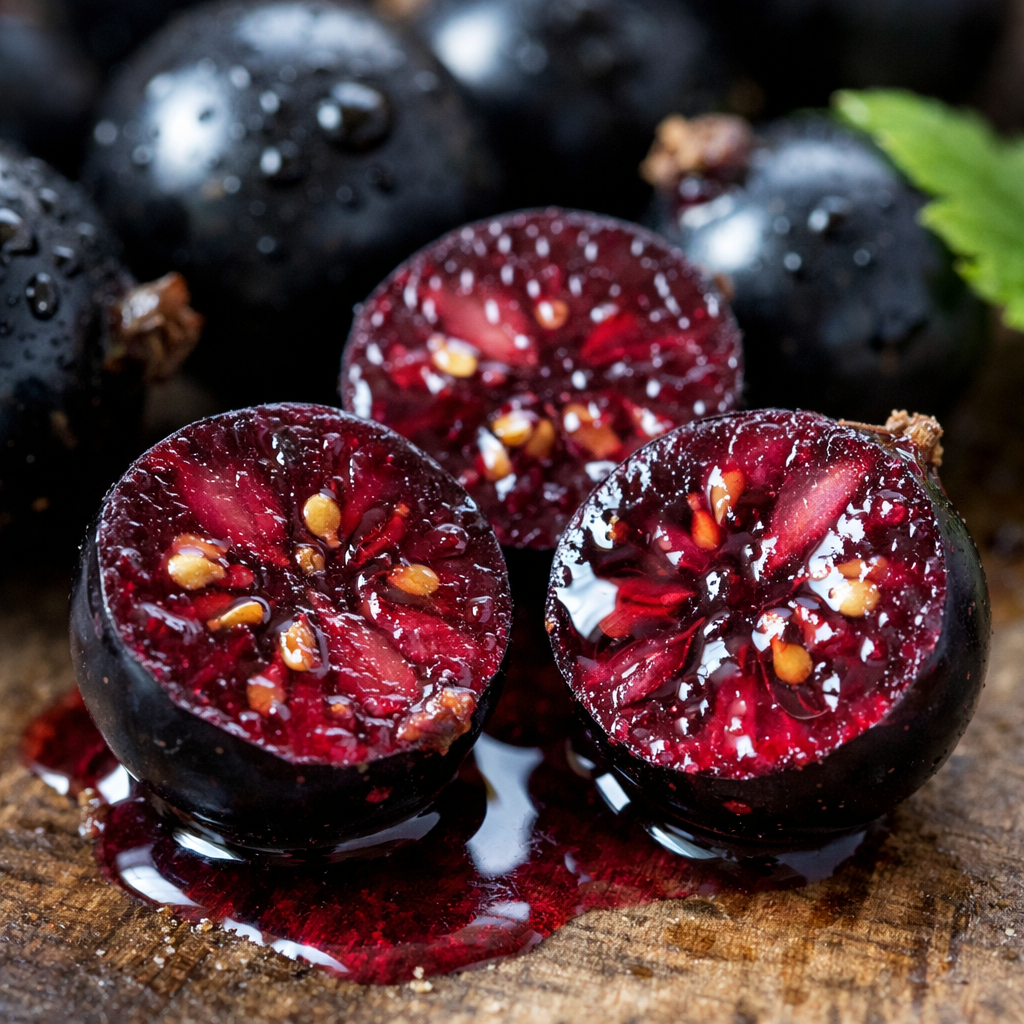
What Do Black Currants Taste Like?
Black currants have a bold, structured flavour profile.
They are bright and tangy, with deep berry notes and a slightly earthy, wine-like finish. The flavour is pronounced rather than sweet, which is why black currants are more often used as an ingredient than eaten casually by the handful.
Their character holds through cooking and processing, making them valued in applications where flavour needs to remain present rather than fade.
Black currants hold their character — even when everything else fades.
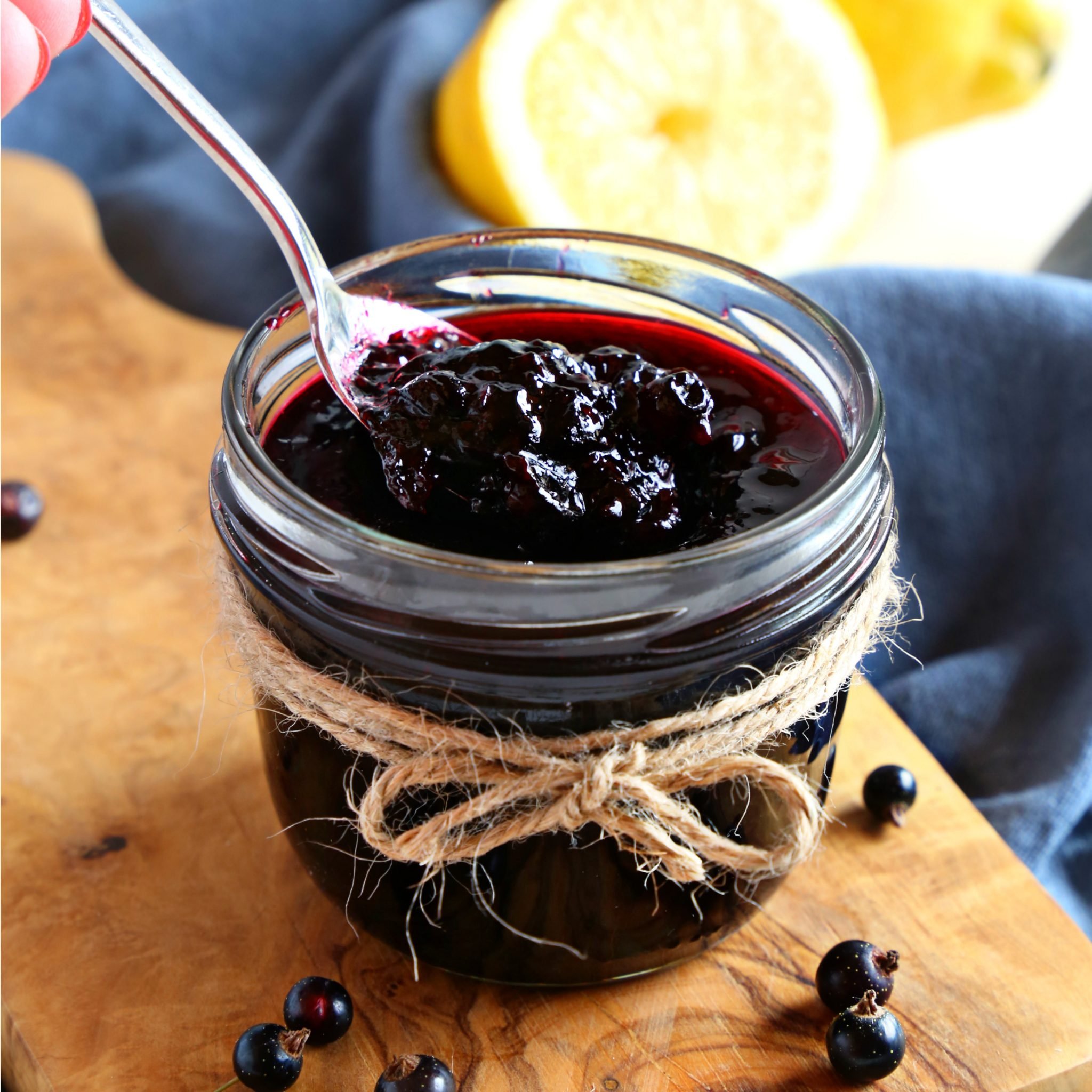
Built for Everyday Use — If You Like Real Impact
Because of their intensity, black currants perform well in everyday applications where flavour and colour need to hold up.
They are commonly used in:
jams and preserves
syrups and reductions
baking
juices, sodas, and fermented beverages
Their flavour remains present through cooking and processing, and a relatively small amount delivers depth of colour and taste.
This makes black currants both practical and efficient to use.
A small quantity goes a long way.
Grown With Intention
At Xander Farms, our black currants are grown organically in southwestern Ontario, where climate and soil are well suited to this crop.
We focus on varietal selection, harvest timing, and careful handling to preserve the qualities that define black currants — deep colour, structured flavour, and consistent character.
The result is a fruit that reflects its growing conditions and the choices made in the field, rather than added processing or enhancement.
What you taste is the result of how it’s grown.